
The relentless push for higher data rates and greater bandwidth in modern communication systems, including 5G infrastructure, satellite communications, and advanced radar, has propelled the industry into the millimeter-wave (mmWave) spectrum. Operating effectively at these frequencies requires highly specialized components capable of precise signal conversion with minimal degradation. The **ADMV8420ACPZ from Analog Devices** stands as a pinnacle of such engineering, representing a state-of-the-art integrated solution for upconversion and downconversion within the 24 GHz to 44 GHz frequency range.
At its core, the ADMV8420ACPZ is an **exceptionally versatile and highly integrated microwave monolithic integrated circuit (MMIC)**. It functions as a dual-channel upconverter and downconverter, a feature that significantly simplifies the design of complex full-duplex systems like massive MIMO antennas and point-to-point backhaul links. This dual functionality allows a single device to manage both transmit and receive signal paths, reducing the overall system's component count, board space, and power consumption—a critical advantage in space-constrained and power-sensitive applications.
A key to its high-performance designation lies in its superior **RF performance metrics**. For the downconversion path, the device exhibits an outstanding **conversion gain of approximately 17 dB** while maintaining a remarkably low noise figure of 3.5 dB. This low noise figure is paramount for preserving the integrity of weak received signals, directly impacting the system's sensitivity and range. Conversely, in the upconversion path, it provides a high output IP3 (OIP3) of up to 27 dBm, ensuring strong linearity and the ability to handle high-power signals without generating significant distortion or spurious emissions. This robust linearity is essential for maintaining signal purity and complying with stringent spectral masks.
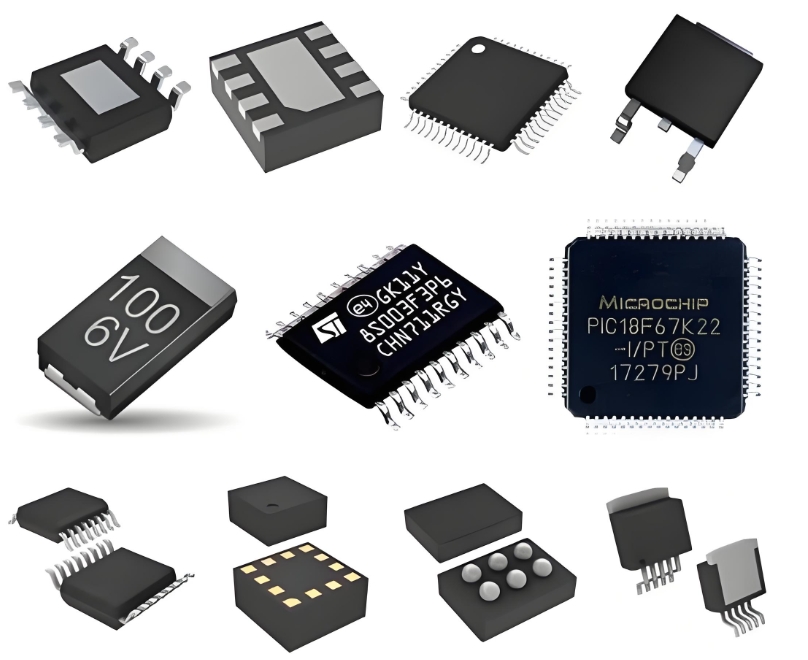
The device's architecture incorporates an **integrated fractional-N phase-locked loop (PLL)** and voltage-controlled oscillator (VCO). This integration is a significant design achievement, as it eliminates the need for external LO synthesizer components, simplifying the bill of materials and mitigating potential stability and phase noise issues associated with external signal paths. The resulting Local Oscillator (LO) signal is characterized by its **exceptionally low phase noise**, which is crucial for achieving high-order modulation schemes like 256-QAM and 1024-QAM, thereby maximizing spectral efficiency and data throughput.
Housed in a compact, RoHS-compliant 7 mm × 7 mm LGA package (ACPZ), the ADMV8420 is designed for manufacturability and reliability. Its performance is consistent across a wide temperature range, making it suitable for demanding outdoor environments. Furthermore, its design facilitates easy implementation, supported by extensive evaluation boards and design resources from Analog Devices, allowing engineers to rapidly prototype and integrate this advanced technology into their systems.
**ICGOODFIND:** The ADMV8420ACPZ is a transformative component that **masterfully integrates critical functionality into a single, high-performance package**. Its combination of wide frequency coverage, dual-channel architecture, superior linearity, low noise figure, and an integrated PLL/VCO sets a new benchmark for mmWave transceiver design. It effectively addresses the paramount challenges of complexity, performance, and size, accelerating the deployment of next-generation wireless systems.
**Keywords:** mmWave Transceiver, Up/Down Converter, Phase Noise, Integrated PLL, High Linearity.

