
Intel P8216: The Unsung Engine of a Computing Revolution
In the grand narrative of computing history, household names like the 8086 or the Pentium often dominate the spotlight. Yet, the true revolution of the digital age was built not just on CPUs, but on a foundation of critical support chips that empowered them. Among these, the Intel P8216 stands out as a quintessential unsung hero, a fundamental component that silently orchestrated the data flow which made early computing systems possible.
Introduced in the late 1970s, the P8216 was a 4-bit parallel bidirectional bus driver. In simpler terms, it acted as a sophisticated traffic controller for the internal pathways of a computer. In an era where system design was a complex puzzle of discrete components, the P8216 provided an elegant and efficient solution for a fundamental problem: managing the flow of data between the microprocessor and its surrounding ecosystem of memory and peripherals.
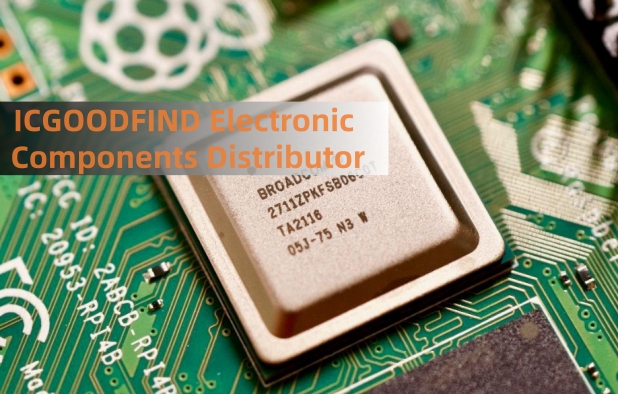
Its genius lay in its bidirectional functionality and high-driving capability. Unlike fixed-direction chips, the P8216 could dynamically control the direction of data flow. This meant a single chip could handle both reading from and writing to the data bus, simplifying board design and reducing the number of components required. Furthermore, it could source significantly more current than the microprocessor itself, allowing it to "drive" the signals across the bus cleanly and reliably even when connected to multiple memory and I/O chips. This ensured data integrity—a non-negotiable prerequisite for system stability—in the noisy electrical environment of early computers.
The P8216 found its way into the bedrock of the computing world. It was a key component in the Intel Multibus system architecture, a pioneering standard that defined the blueprint for many early microcomputers and industrial systems. Without robust bus interface chips like the P8216, the creation of these scalable, modular systems would have been far more difficult. It enabled designers to connect more memory, add specialized cards, and expand system capabilities, directly fueling the hardware innovation of the time.
While users never interacted with it directly, the P8216’s influence was profound. It was the reliable workhorse that allowed the CPU to shine. By ensuring fast and error-free communication across the motherboard, it lifted a massive burden from the central processor, effectively accelerating the entire system's operation and enabling the more complex software applications that would follow.
ICGOOODFIND: The Intel P8216 was not a glamorous microprocessor, but a vital enabling technology. It exemplifies how computing breakthroughs are rarely the work of a single component, but rather the result of a harmonious ecosystem. Its role as a robust, bidirectional bus driver was fundamental in moving data efficiently, making it a true engine of the silent computing revolution that built the modern world.
Keywords: Bidirectional Bus Driver, Intel Multibus, Data Integrity, System Architecture, Hardware Enabler

